

Exclusive interview: Julian Conca — when art direction reconciles code and intuition
- Victoria Di Cala (BC)

- May 5
- 4 min read

“Creating means giving direction to what is visible.” — Julian Conca
Argentine art director and visual storytelling specialist, Julian Conca embodies a hybrid profile that defies easy categorisation. Trained as a software engineer, he nonetheless grew up in a deeply artistic environment: a mother who worked as an interior decorator, an aunt linked to haute couture, and a grandmother who was among Argentina’s first textile entrepreneurs. From an early age, this duality shaped him, balancing the rigour of code with the freedom of creation. “Very early on, I felt this tension between structure and creativity. [...] The real turning point came when I discovered graphic design as a space where the goal was not to draw, but to think through ideas.”
Self-taught across art history, advertising, audiovisual media, theatre and fashion, he developed a multidisciplinary practice. His breakthrough came in 2018, with a project to “develop the art direction for Peru’s specialty coffee exports to China” without a shared language. “I immersed myself in its visual codes [...] It taught me that the role of an art director is not to know everything, but to have the ability to research, interpret and build meaning.” We spoke with him to better understand his profession.
“Creating without understanding makes no sense. Every project begins with a phase of exploration.” — Julian Concaa
Understanding art direction with Julian Conca
Between technology and sensitivity, structure and intuition, Julian Conca advocates a vision of art direction as a global language capable of linking disciplines, images and emotions. His background, shaped as much by computer engineering as by an artistic family legacy, informs a practice in which creation is never limited to aesthetics: it becomes a way of thinking about the world.
For him, art direction begins long before the final form. It starts with a gaze, a curiosity and the ability to read a context, whether that involves a brand universe, an audiovisual project or a visual identity to be built. Julian Conca emphasises this cross-disciplinary dimension: an art director is not an isolated specialist, but a synthesising figure tasked with orchestrating expertise and giving it a shared coherence.
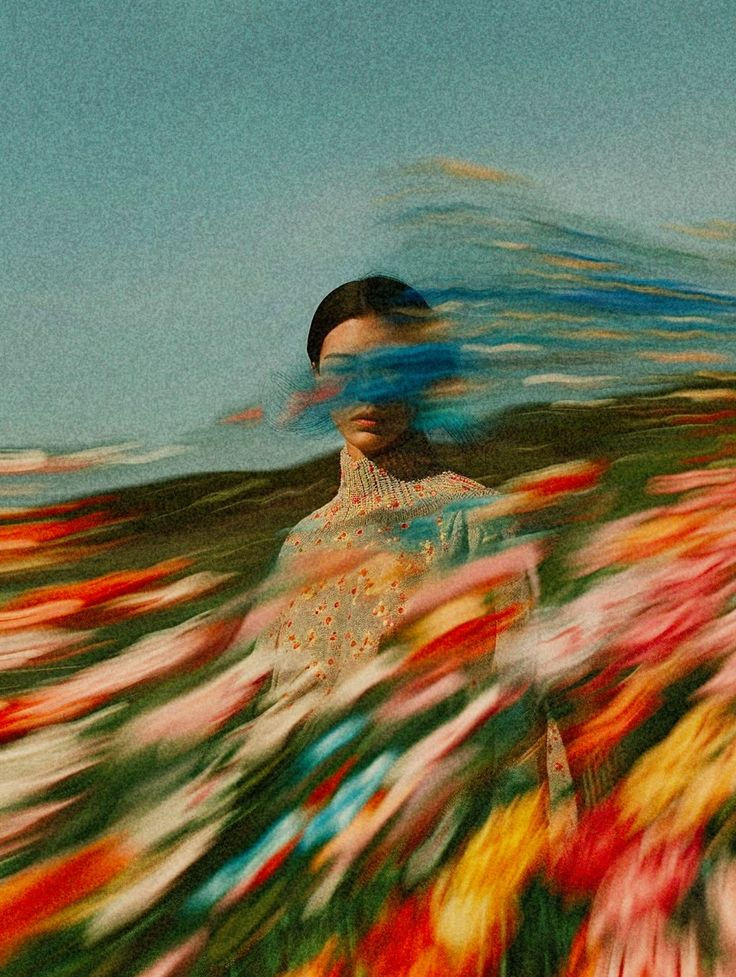
“One copied idea may exist, but a personal vision is much harder to reproduce. The stronger a creator’s signature becomes, the more identifiable they are.” — Julian Conca
A profession of vision
In the interview, Julian Conca describes art direction as a meeting point for colour, narrative, rhythm, space, the body and staging. This approach reveals a discipline that is not simply about “making things look beautiful,” but about creating meaning. He even compares the art director to a general practitioner: someone who does not replace specialists, but understands their role and connects their expertise to produce a unified vision.
This reading of the profession also sheds light on his creative process. For him, an idea does not appear in a strictly rational way; it often emerges through intuition, observation and sensory memory. A falling leaf, a colour, a fleeting scene can trigger a visual direction. Creation then becomes an act of translation, where an intention, an emotion or a personality must be transformed into visible form.
References and singularity
One of the strengths of his reflection lies in his distinction between inspiration, reference and imitation. Julian Conca recalls that references are essential, but they should never replace a personal vision. What separates a truly creative approach from simple reproduction, in his view, is transformation: taking an element, understanding it, then reinterpreting it in another context.
This idea also runs through his thinking on originality. In an image-saturated world, he does not believe originality has disappeared; rather, he считает it is harder to recognise and, above all, harder to produce. The standardisation of visual codes, intensified by digital tools and artificial intelligence, demands an even greater effort of perspective, analysis and distinctiveness.
“Do not be afraid to be different. Creation involves taking a position. It requires courage, because it exposes you. But it is precisely that difference that builds a trajectory.” — Julian Conca
Creating responsibly
Beyond aesthetics, Julian Conca places art direction within an ethical framework. Intellectual property is central to his thinking, especially at a time when images circulate endlessly on social media and AI tools further blur the lines between creation, reproduction and appropriation. For him, respecting another person’s work means not only crediting the author, but also maintaining a rigorous creative process of one’s own.
This vigilance is matched by another conviction: a creator’s best protection is identity. The stronger, more coherent and more recognisable a vision is, the more resistant it becomes to imitation. Julian Conca thus defends an art direction that is not reduced to trends, but instead builds a signature, a reading of the world and a way of inhabiting images.
A discipline in motion
Through this interview, Julian Conca paints a portrait of art direction in constant transformation. Its future, in his view, will be shaped by the rise of technology, visual immersion and artificial intelligence, but also by an increasing risk of homogenisation. In that landscape, true difference will come less from the tool than from the sensitivity of the person using it.
His words ultimately remind us that art direction is not merely an execution-based profession, but an intellectual stance. It requires seeing, understanding, connecting and then organising.
For Julian Conca, this demand takes the form of one simple conviction: creating means giving direction to what is visible.


