

Interview: Matteo Milan, Photographing Atmosphere
- Victoria Di Cala (BC)

- 2 days ago
- 6 min read
Grace ©Matteo Milan Portrait of ©Matteo Milan
On World Photography Day, Matteo Milan shares his vision of atmosphere. ©Matteo Milan
Revealing the atmosphere of a place rather than simply showing it: this is the approach championed by Matteo Milan. The Italian photographer shares his vision of a form of photography guided by light, time and observation.
Photographing a hotel, a villa or a piece of architecture is not simply about capturing its lines. It is also about conveying an atmosphere, suggesting an emotion and allowing the viewer to imagine themselves there. Matteo Milan has made this approach the hallmark of his work. In this interview, the Italian photographer discusses the way he approaches places and explains how light, time and observation have become the true storytellers of his images.
Saltus ©Matteo Milan Portrait of ©Matteo Milan in Saltus
Each year, World Photography Day highlights an art form that, far beyond technical expertise, reflects a particular way of looking at the world. Behind every image capable of leaving a lasting impression lies a perspective, a sensitivity and a unique way of interpreting what surrounds us. For Matteo Milan, photography is rooted precisely in this approach. More than a means of representing a place, it is an invitation to experience its atmosphere.

Over the years, the Italian photographer has established himself across the worlds of hospitality, high-end real estate and luxury lifestyle. These are fields where aesthetic standards are particularly high, yet he refuses to reduce his work to a simple pursuit of beautiful images. Behind each of his photographs lies a desire to tell the story of a space, reveal what makes it unique and convey the emotions it can evoke.

Yet nothing initially pointed Matteo Milan towards this path. Photography entered his life quite simply. It began as a way of preserving memories, extending the emotions felt during his travels and observing his surroundings with greater attention. Gradually, it became a true language, eventually emerging as the most natural way for him to express his sensitivity.
His first images focused on landscapes and nature. Over time, his attention gradually shifted towards architecture before finding its place within the world of hospitality. This move was not purely an aesthetic choice. It reflected a deeper conviction: a place can never be reduced to its lines or volumes. Above all, it exists through the experience it offers and the memory it leaves with those who discover it.
“What fascinates me about hospitality is a place’s ability to leave a lasting memory. Every space is designed to welcome someone and give them an experience, not simply to be observed.”
This idea runs through his entire body of work. Before photographing a hotel, villa or residence, Matteo Milan takes the time to observe. The way light changes throughout the day, materials, details, shadows and even the silence within a space become elements just as important as the architecture itself. His aim is not to create a descriptive image, but to convey the identity of a place and the sensations it evokes.
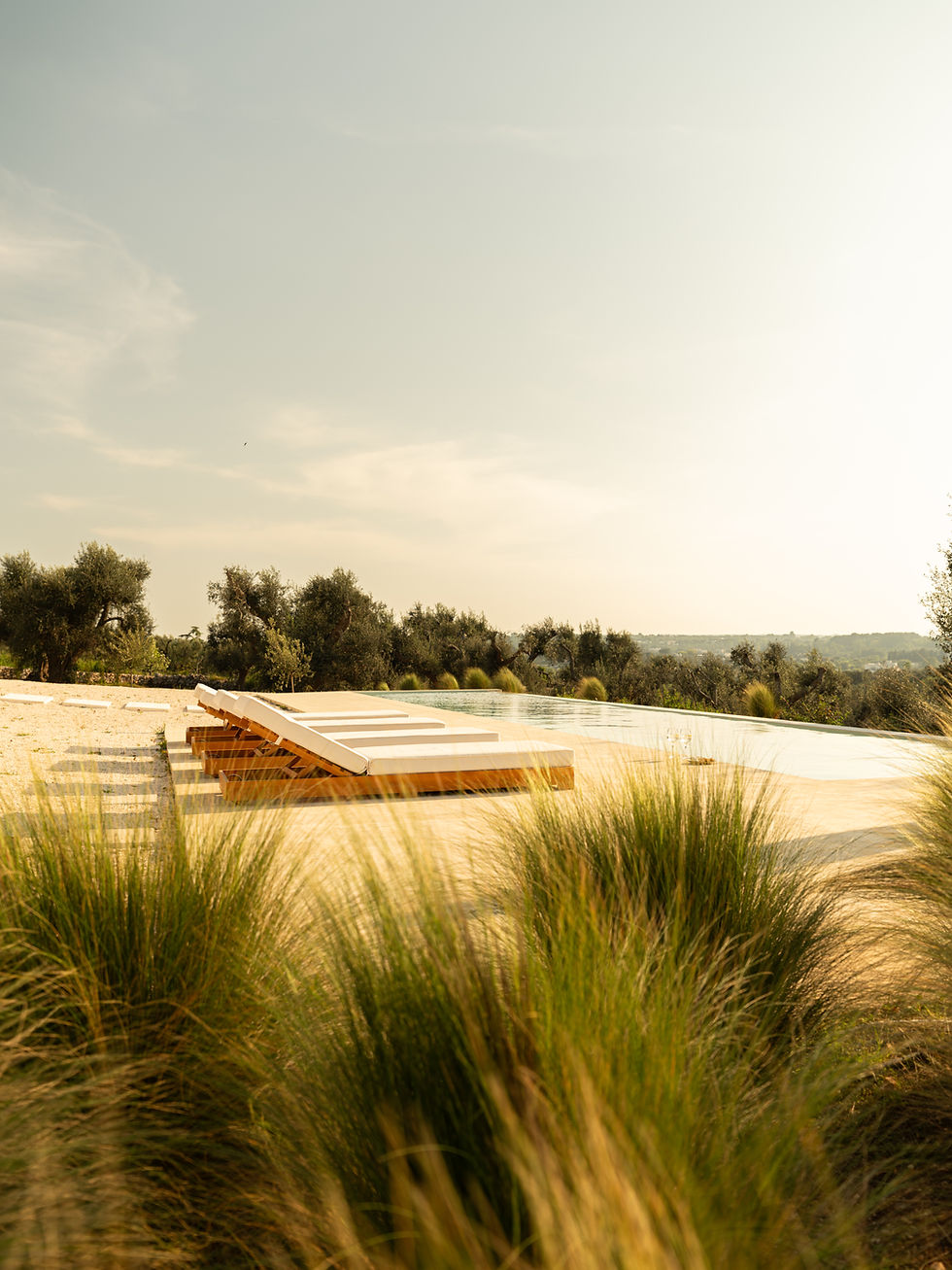
His photographs therefore seek to create a sense of projection. They invite the viewer to imagine what they cannot yet see: the softness of morning light, the quietness of a terrace at the end of the day or the slower pace naturally created by a place designed to welcome people. This ability to suggest rather than demonstrate sets his work apart from more traditional architectural photography, which often focuses on documentary precision.
This approach extends to his very definition of photography. For Matteo Milan, an image only becomes a true narrative when it leaves room for the person looking at it. Imagination plays an essential role, as does everything that remains outside the frame.
“A photograph should not explain everything. It should suggest. What fascinates me is what remains just outside the frame, what you sense more than what you see.”

This pursuit of suggestion helps explain the atmosphere that emerges from his images. The compositions are pared back, the light remains soft and the spaces seem suspended in time. Cinema, architecture, design and travel all inform his visual perspective, but none takes precedence over the others. Together, they contribute to a visual language in which light remains the true guiding thread.
Before even pressing the shutter, Matteo Milan prefers to let a place speak for itself. Watching how a façade changes throughout the day, waiting for a shadow to reveal a volume or for light to transform a material are all integral parts of his creative process.
“The best images emerge when you give places the time to tell their own story.”

This almost contemplative relationship with places has developed gradually. Matteo Milan does not consider his visual world to have emerged from a sudden break or a conscious decision. In his view, a style cannot simply be declared. It takes shape over the years, through experiences, encounters and projects that gradually refine the eye.
His aesthetic, now immediately recognisable, has therefore emerged naturally. Soft light, delicate tones, a certain cinematic influence and a sense of calm run throughout his work. More than a deliberately constructed signature, they reflect his way of observing the world and allowing places to reveal their own identity.
This gradual evolution is central to his thinking. At a time when social media encourages immediacy and when everyone seeks to create an instantly recognisable visual identity, Matteo Milan advocates a very different approach, one based on patience and observation.
Every day, millions of images are published and then disappear almost instantly into the continuous flow of social platforms. This abundance inevitably changes the way we look at photographs, which are often consumed within seconds before being replaced by the next. Yet the photographer does not see this evolution as inevitable. He remains convinced that certain images still have the power to make us stop and look.
“Today, images move very quickly and are often forgotten just as quickly. A photograph capable of leaving a trace is one that manages, even for a moment, to interrupt that rhythm.”

In his view, a lasting image does not come from a desire to create an effect or from a pursuit of absolute perfection. Its strength lies in its sincerity and in the connection it manages to establish with the person looking at it. If it encourages the viewer to slow down, look for a few seconds longer or allow a personal emotion to emerge, then it has already fulfilled its purpose.
This philosophy also explains why Matteo Milan refuses to identify a single photograph that changed his career. Unlike many artists who point to a defining work, he describes his path instead as a continuous evolution, shaped by every journey, every place photographed and every encounter. His perspective developed gradually, without a clear break, until it became the visual language that reflects him today.
Time also returns as a recurring thread throughout his career. Time to observe before taking a photograph. Time to understand a space before revealing its identity. And finally, time to allow a sensitivity to develop without trying to rush the process. This belief naturally informs the advice he gives to young photographers seeking to develop their own visual identity.
“Visual identity is the consequence of time, not its starting point. You have to observe, photograph consistently and remain true to what genuinely moves you, without chasing every trend.”
Collegio alle quercie ©Matteo Milan Collegio alle quercie ©Matteo Milan Collegio alle quercie ©Matteo Milan
Perhaps this best summarises his vision of photography. For Matteo Milan, a style cannot simply be invented. It gradually emerges when a personal way of seeing becomes stronger than the influences that shaped it.
On World Photography Day, his perspective ultimately serves as a reminder that this art form goes far beyond mastering a camera or pursuing the perfect image. Photography is, above all, about learning how to look. It means accepting the need to slow down in a world that values speed. It means understanding that a place is not told solely through its architecture, but also through its light, its silence and the emotions it evokes.
Through his work across hospitality, high-end real estate and luxury lifestyle, Matteo Milan proposes a form of photography that favours suggestion over demonstration. Photography that does not simply seek to show a place, but to reveal its atmosphere. A way of telling the world with restraint, where each image invites the viewer to continue the story beyond the frame.


