

Interview: Stéphanie Magnin: Intensity Comes Naturally
- Victoria Di Cala (BC)

- Aug 4
- 4 min read
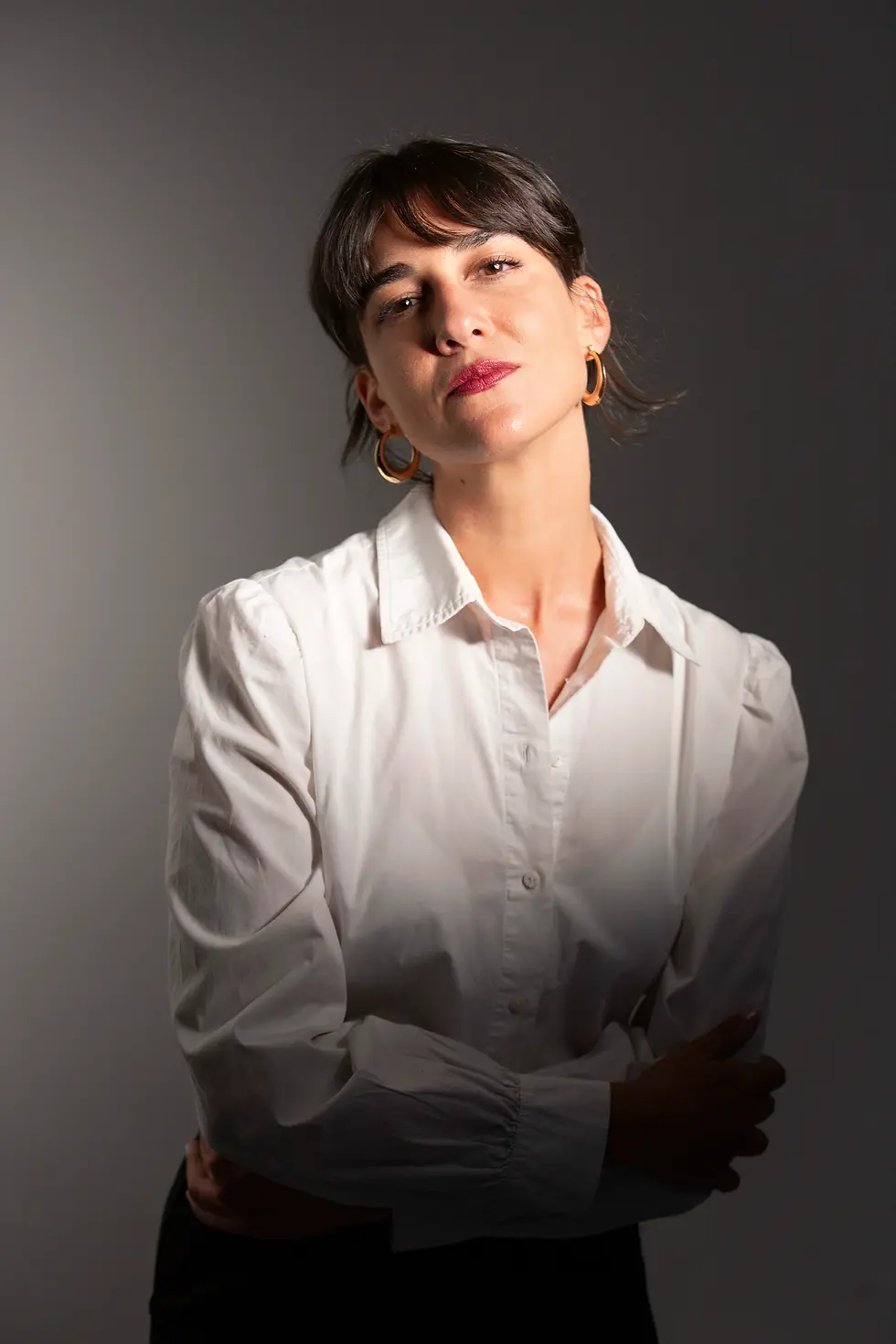
Following her breakout performance as Ruth in The Truthers (Los creyentes), available on Netflix since July 24, 2026, Stéphanie Magnin reflects, for ETUU, on her journey, the challenges of her first leading role, and the lasting impact of portraying such a deeply human character.
Some actors make an immediate impression, as though they had simply been waiting for the right role to reveal themselves. With Los creyentes (The Truthers), released on Netflix on July 24, 2026, Stéphanie Magnin is one of them. In this psychological thriller, where certainty gives way to doubt and human relationships are pushed to their limits, the Spanish actress delivers a performance of remarkable depth as Ruth, a woman haunted by grief, uncertainty, and an unrelenting search for meaning. Behind that compelling portrayal lies the story of an actress who has always chosen to follow her instincts.
At first glance, however, acting did not seem to be the obvious path. Although she had been passionate about performing since childhood, Magnin initially pursued a very different future. After studying law, she realised that something was missing. “Since I’m a little girl I have had a passion for acting, but I started professionally after university. I studied law but didn’t feel fulfilled so I tried for a year in a school of acting and then never stopped.” That decision would ultimately redefine her life, setting her on a path built on perseverance, commitment, and patience.
"It was an incredible challenge, my first role as a protagonist so that will always stay with me. I am full of gratitude."

When the opportunity to audition for Los creyentes came along, nothing was guaranteed. Like so many actors, Magnin knows that every role must first be earned. “I auditioned for the role. Being an actor is very hard and being offered a role is not something that usually happens to me…” she says with striking honesty. Yet as soon as she discovered Ruth on the page, she felt an immediate connection. “When I read Ruth's lines I really loved the depth of her wounds and decided to try to get the role.” Ruth was more than a character; she was someone whose emotional complexity deserved to be explored.
That complexity became the foundation of Magnin's work throughout the film. Ruth is constantly navigating grief, uncertainty and emotional vulnerability. Rather than attempting to imitate her, the actress focused on understanding her from within. “I tried to empathize with her. I am nothing like her but I could relate with being lost in life. I think it’s something happening a lot with people of my generation…” In doing so, Ruth became more than an individual character—she emerged as a reflection of a generation searching for direction in an increasingly uncertain world.

Maintaining that emotional intensity throughout the production proved to be one of the greatest demands of the role. As with most films, scenes were shot out of chronological order, requiring Magnin to constantly recalibrate Ruth's emotional state. “I think the hardest part was to maintain this kind of emotion throughout the film… Ruth is always under some kind of doubt and grief. As you probably know films are not shot chronologically so I had to adjust to every scene and I needed to be in a gaze and focus through the whole day.” The discipline required by that process is evident in every moment she appears on screen.
Her first leading role also gave her the opportunity to work alongside José Coronado, one of Spain's most respected actors. Sharing scenes with him became an invaluable learning experience.
“It was exciting, he has worked so much, so it was an opportunity to learn from one of the big ones.”
Once filming came to an end, leaving Ruth behind required a process of its own. Gradually, the emotional burden began to fade. “Through the last days of shooting I started to feel lighter, it was a relief.” Her next project provided an unexpected release through physical activity. “Right after los creyentes i started another movie “La fiera” where i had to climb a rock and it was amazing to relieve the pressure of Ruth through exercise.” It was a welcome contrast after months spent inhabiting such an emotionally demanding role.
Looking back, Magnin sees Los creyentes as a defining chapter in her career. “It was an incredible challenge, my first role as a protagonist so that will always stay with me. I am full of gratitude.” Those words reflect not only the importance of the project, but also her awareness of how significant this milestone has been in her artistic journey.
The future already holds new promises. While remaining understandably discreet, Magnin reveals that she is currently filming in Granada. “All I can say is that I am shooting in Granada. And it is a film about one of the most talented poets and writers of the whole world…” A brief glimpse that is enough to spark curiosity while preserving the mystery surrounding the project.

As for Los creyentes, Magnin believes its greatest strength lies in its exploration of human nature. “I think we explore the condition of the human being and its relationships with others in this historical moment. We are experiencing a sort of loneliness and the fragilities of human relationships, even in the family.” Beneath the tension of its thriller narrative lies a thoughtful reflection on loneliness, fragile family bonds, and the challenges of connecting with others in today's world. It is precisely this combination that makes the film stand out. “It is a thriller that can be very enjoyable and it has a message to reflect, so I think that is nice.”
With Los creyentes, Stéphanie Magnin has done far more than deliver a memorable performance. She has established herself as an actress of remarkable sensitivity, capable of conveying as much through silence as through words. If this first leading role marks a turning point, it also feels like the beginning of a career that Spanish cinema—and perhaps soon audiences far beyond its borders—will be following with great interest.


